

Government Training Services for State, Local & Public Sector Agencies
TrainingFolks helps federal, state, county, city, and municipal government agencies develop the skills their employees need to serve communities effectively. From government leadership training and employee onboarding to custom eLearning development, instructional design, technology adoption, and contract trainers, we provide flexible public sector training solutions tailored to your agency's workforce, operational priorities, and budget.
Whether you're developing a new training program, modernizing government systems, or seeking an experienced training vendor for an upcoming initiative, TrainingFolks can help.
Custom Training Solutions for Government Agencies
State, city, county, and federal government agencies face growing pressure to modernize services, adopt new technologies, and develop employee skills while managing limited resources.
TrainingFolks provides custom government training services, including instructional design, eLearning development, leadership training, and experienced contract trainers. We help agencies turn complex policies, systems, and procedures into practical employee training.
From onboarding and workforce development to technology adoption and training across multiple locations, we help government agencies build stronger, more capable teams.

Leadership & Management Development
As experienced public servants retire, agencies face the challenge of transferring institutional knowledge and preparing the next generation of leaders.
Customized government leadership training helps develop new supervisors, strengthen management skills, and build succession plans that maintain continuity and performance across departments.
Technology Adoption & Digital Transformation
State and local governments are investing in modern systems, digital services, and AI, but technology alone doesn't improve operations. Employees need the skills and confidence to use it effectively.
From software rollouts to responsible AI adoption, custom eLearning, hands-on instruction, and change management support help turn technology investments into practical improvements.
Policy, Process & Compliance
Evolving regulations, cybersecurity threats, and data privacy requirements are placing greater demands on public agencies. Keeping employees informed and procedures consistent is essential.
Role-specific learning, instructional design, and accessible digital resources help employees understand new requirements, reduce errors, and apply policies confidently in their daily work.
Public Service & Communication Skills
Residents expect accessible, responsive services, even as departments manage staffing limitations, increasing workloads, and tighter budgets.
Practical public sector training develops communication, conflict resolution, and customer service skills, helping frontline employees navigate difficult interactions, build public trust, and deliver better community experiences.
Flexible Learning for Government Workforces
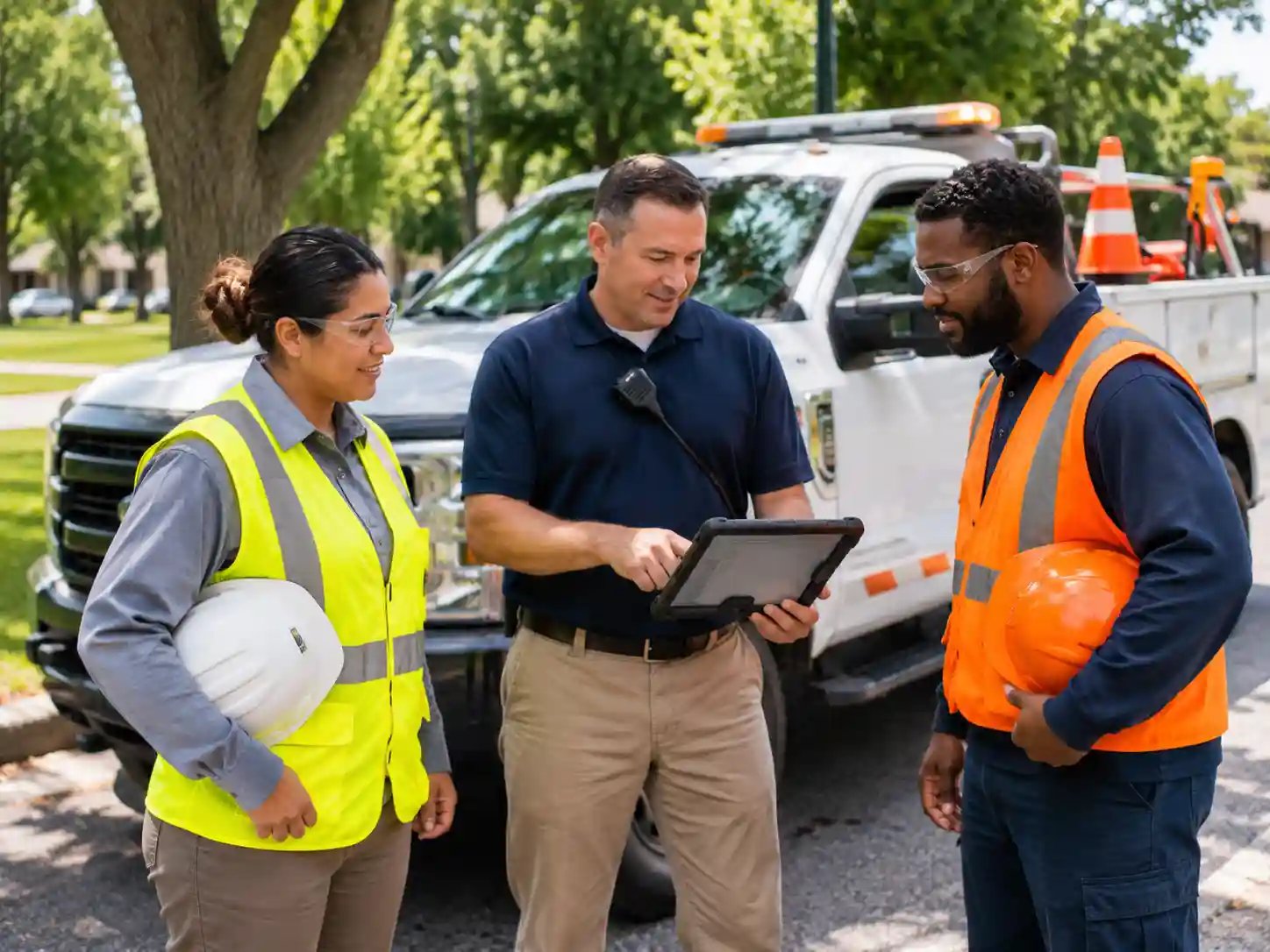
From city offices and public works departments to field operations and community services, government employees work across different locations, schedules, and responsibilities. Traditional classroom training isn't always practical.
Custom eLearning, virtual instruction, and blended learning programs make development more accessible and consistent, helping agencies reach employees wherever they work.
Designed around real job responsibilities, these solutions support workforce readiness, knowledge retention, and accessible learning across departments.
Knowledge Transfer & Employee Onboarding
As experienced public servants retire, agencies risk losing valuable institutional knowledge, while new employees face a steep learning curve navigating complex processes and responsibilities.
Structured onboarding, knowledge capture, and custom eLearning help preserve critical expertise, accelerate employee readiness, and ensure continuity of essential public services.
Training Delivery & Program Management
Delivering workforce development programs across multiple departments, locations, and employee groups requires careful coordination, consistent execution, and measurable results.
From statewide initiatives to municipal programs, end-to-end training services include program planning, instructor-led and virtual delivery, scheduling, learner support, and progress reporting. This approach reduces the burden on internal teams while ensuring a consistent learning experience.
AI Readiness & Responsible Adoption
As state and local governments introduce AI into public services and daily operations, employees and leaders need to understand its opportunities, risks, and responsible use.
Custom eLearning, AI awareness videos, virtual workshops, and classroom training help employees build AI literacy, protect sensitive information, and use approved tools in accordance with agency policies.
Specialized management training prepares supervisors and leaders to guide AI adoption, address ethical concerns, maintain human oversight, and help their teams navigate change with confidence.
Technology Implementation & Workforce Readiness
Modernizing public services requires more than implementing new technology. Employees must be prepared to adopt unfamiliar systems, adapt established workflows, and maintain service continuity throughout the transition.
Customized learning solutions support major technology initiatives, including:
- Enterprise Resource Planning (ERP) and financial systems
- Human Resources Information Systems (HRIS) and payroll platforms
- Case management and citizen service applications
- Records and document management systems
- Learning Management Systems (LMS) and digital collaboration tools
Through role-based instruction, custom eLearning, and change management support, agencies can accelerate adoption, minimize disruption, and maximize the value of their technology investments.
AI Readiness & Responsible Adoption
As state and local governments introduce AI into public services and daily operations, employees and leaders need to understand its opportunities, risks, and responsible use.
Custom eLearning, AI awareness videos, virtual workshops, and classroom training help employees build AI literacy, protect sensitive information, and use approved tools in accordance with agency policies.
Specialized management training prepares supervisors and leaders to guide AI adoption, address ethical concerns, maintain human oversight, and help their teams navigate change with confidence.
Do you face any of these challenges?
Modernizing Outdated Government Systems
Legacy technology and new digital platforms can disrupt essential services when employees struggle to adapt to changing systems, processes, and workflows.
Losing Critical Institutional Knowledge
Retirements and workforce turnover put decades of expertise at risk, leaving agencies vulnerable to knowledge gaps, inconsistent processes, and service disruptions.
Delivering More with Limited Resources
Tight budgets, staffing shortages, and competing priorities make it difficult to develop and deliver essential workforce training across departments.
Preparing Employees for Responsible AI Adoption
As AI becomes part of public-sector operations, employees need clear guidance on approved tools, data privacy, accuracy, ethical use, and human oversight.
Developing the Next Generation of Government Leaders
Retirements, changing workforce expectations, and growing responsibilities are creating leadership gaps that require stronger succession planning and management development.
Keeping Pace with Policy & Regulatory Changes
Evolving legislation, security requirements, and internal procedures make it challenging to keep employees informed, compliant, and prepared for changing responsibilities.
Accelerating Employee Onboarding
Complex procedures, specialized roles, and limited access to experienced colleagues can delay new employees from becoming confident and productive.
Maintaining Consistency Across Departments
Different offices, locations, and employee groups often follow inconsistent practices, creating gaps in knowledge, performance, and service delivery.
Improving Public Service & Communication
Rising community expectations and complex resident needs place greater demands on employees to communicate clearly, resolve conflicts, and deliver responsive services.
Demonstrating the Value of Training Investments
Public agencies face increasing pressure to show measurable improvements in employee capabilities, operational efficiency, and service outcomes—not just course completion rates.
Frequently Asked Questions
State and local government agencies commonly need leadership development, employee onboarding, compliance education, technology training, workforce development, and customer service programs.
The right solution depends on the agency's responsibilities and workforce. A city introducing a new financial system may need role-based software instruction, while a county government preparing new supervisors may prioritize leadership and management development.
TrainingFolks supports these needs through custom eLearning, instructional design, virtual and classroom instruction, and managed training programs tailored to public-sector operations.
State, county, and municipal governments can identify qualified training vendors through procurement portals, Requests for Information (RFIs), Requests for Proposals (RFPs), vendor research, and referrals from other public agencies.
When comparing providers, evaluate their experience with government projects, instructional design capabilities, accessibility practices, project management, delivery methods, and ability to meet defined requirements.
A qualified government training partner should understand the agency's operational challenges and demonstrate how its proposed services will achieve specific learning objectives within the established budget and timeline.
A government training RFP should clearly define the project's objectives, target audience, scope of services, expected deliverables, delivery format, accessibility requirements, timeline, budget parameters, and vendor evaluation criteria.
For custom eLearning or instructional design projects, agencies should also consider content ownership, learning management system compatibility, assessment requirements, review cycles, and ongoing maintenance.
An RFI can help procurement teams understand available solutions before developing a formal solicitation. Early market research can clarify project requirements, identify realistic delivery approaches, and support more informed purchasing decisions.
Government leadership training helps supervisors, managers, and emerging leaders develop the skills needed to manage employees, navigate organizational change, and maintain effective public services.
Programs commonly address communication, coaching, conflict resolution, performance management, accountability, decision-making, and succession planning.
For state and local agencies facing retirements and leadership transitions, customized development programs can also help preserve institutional knowledge and prepare employees for expanded management responsibilities.
Successful government technology training begins by identifying how new systems will change employees' daily responsibilities and workflows.
A structured approach typically combines role-based instruction, hands-on practice, custom eLearning, virtual or classroom sessions, and practical job aids. These resources help employees prepare for new ERP, HRIS, financial, case management, and citizen service platforms.
Training should begin before implementation and continue after launch, with additional support for employees adapting to new processes. This approach helps reduce disruption, improve user adoption, and protect service continuity.
Government AI readiness programs should help employees understand approved AI tools, appropriate workplace applications, data privacy, information security, accuracy, and the importance of human oversight.
Custom eLearning, awareness videos, virtual workshops, and instructor-led sessions can build practical AI literacy across departments. Managers may need additional guidance on responsible decision-making, employee supervision, policy compliance, and managing organizational change.
Effective AI education should reflect each agency's approved technologies, internal policies, and responsibilities to the public rather than relying on generic instruction.
Yes. Government agencies can procure project-based instructional design, custom eLearning development, curriculum design, and training delivery services through their applicable purchasing processes.
These services may include needs assessments, course design, interactive learning modules, educational videos, facilitator guides, assessments, accessibility considerations, and learning management system integration.
Outsourcing a defined learning project allows agencies to access specialized expertise while retaining oversight of content, policies, approvals, and project outcomes. TrainingFolks supports these initiatives through customized learning solutions and managed project delivery.
Government agencies can reduce the loss of institutional knowledge by documenting critical processes, capturing experienced employees' expertise, and converting that information into structured learning resources.
Effective approaches include subject matter expert interviews, process documentation, video demonstrations, digital job aids, knowledge libraries, and role-specific onboarding programs.
Custom instructional design helps turn this knowledge into practical resources that new employees can access and apply, supporting workforce continuity and reducing dependence on individual employees.
Agencies can reach employees across offices, departments, and field locations through a combination of accessible eLearning, virtual instructor-led sessions, classroom instruction, and blended learning programs.
Standardized curricula, consistent assessments, mobile-friendly resources, and centralized learning platforms help maintain quality while accommodating different schedules and responsibilities.
Accessibility should be considered throughout development, including applicable Section 508 requirements, WCAG guidelines, captions, keyboard navigation, and alternative content formats where appropriate. This helps agencies provide more inclusive learning experiences.
Government agencies can evaluate training effectiveness by measuring improvements in employee knowledge, job performance, operational consistency, and service outcomes—not simply course completion.
Useful measures include assessment results, time to proficiency, system adoption rates, reduced processing errors, employee feedback, and improvements in service delivery.
For stronger evaluation, agencies should establish measurable objectives before development, collect baseline data where practical, and review results after implementation. Connecting learning outcomes to operational priorities helps demonstrate the value of public-sector workforce development investments.
Our Recent Blog Posts

Role Based Training Approaches for System Implementation Projects
Role Based Training Approaches for System Implementation Projects System implementation projects require employees to learn new processes, tools, and workflows. A common challenge is delivering traini…

How Contract Trainers Support Large Scale Training Rollouts
How Contract Trainers Support Large Scale Training Rollouts Large scale training rollouts are often required during system implementations, organizational changes, or enterprise wide initiatives. Thes…
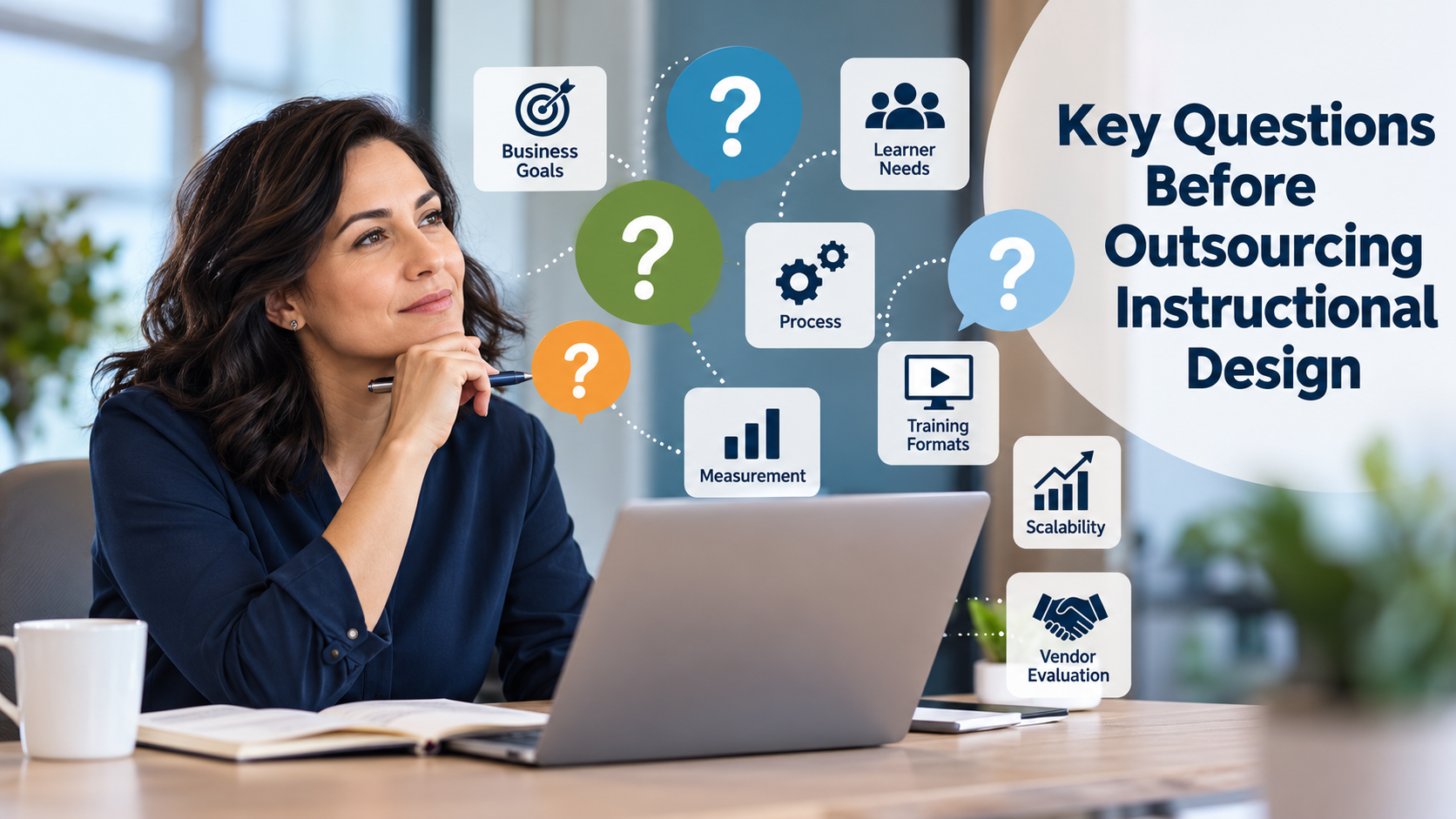
Key Questions Before Outsourcing Instructional Design
Key Questions Before Outsourcing Instructional Design Outsourcing instructional design can help organizations expand training capacity, improve course quality, and move important learning projects for…