

Pharmaceutical & Biotechnology Training Solutions
How do pharmaceutical and biotechnology companies keep pace with evolving regulatory requirements, increasingly complex manufacturing processes, and rapid technological change? From maintaining GMP compliance and quality standards to preparing teams for new products and technologies, effective training is essential to reducing operational risk, maintaining consistency, and supporting business performance.
Custom Training for Pharmaceutical & Biotechnology Companies
For pharmaceutical and biotechnology companies, bringing new products to market, scaling manufacturing operations, and adopting emerging technologies create significant training challenges. As processes become more complex and experienced employees become harder to replace, organizations must find ways to transfer critical knowledge, prepare employees for changing responsibilities, and maintain consistency without disrupting operations.
At TrainingFolks, we work alongside your internal subject matter experts (SMEs) to turn specialized scientific, technical, and operational knowledge into effective learning experiences. Our instructional designers, eLearning developers, and training professionals know how to capture expertise, simplify complex information, and create practical, role-based training that employees can understand, retain, and apply on the job.
Whether you're onboarding employees for a new facility, introducing manufacturing equipment, supporting a product launch, implementing new systems, or standardizing training across multiple sites, our team provides the learning expertise and flexible resources to help you accelerate readiness, reduce training bottlenecks, and support consistent performance.

Pharmaceutical Manufacturing & Operational Training
Introducing new equipment, expanding production capacity, and updating manufacturing processes can create training bottlenecks that affect operational readiness. Organizations must prepare employees for changing procedures while maintaining quality, consistency, and production schedules.
We partner with your manufacturing and technical experts to develop training that supports equipment introductions, process changes, standard operating procedures, and new facility onboarding. Our instructional designers and training professionals help turn operational knowledge into practical learning that employees can apply on the job, whether at one facility or across multiple locations.
Biopharmaceutical & Biotechnology Training
Biotechnology and biopharmaceutical organizations face unique challenges as scientific discoveries move toward commercial production. Scaling complex processes, transferring specialized knowledge, and introducing new technologies require training that evolves alongside the business.
Our team works closely with your scientific and technical subject matter experts (SMEs) to transform specialized knowledge into structured, accessible learning. From employee onboarding and process training to technology adoption and knowledge transfer, we create customized learning experiences that help employees build confidence, adapt to change, and perform consistently.
Pharmaceutical Compliance & Quality Training
Changing regulatory expectations, updated procedures, and increasing documentation requirements make it challenging for pharmaceutical organizations to keep employees informed and consistently applying established quality standards. Training must do more than communicate requirements; it must help employees understand how those requirements apply to their everyday responsibilities.
Our learning specialists collaborate with your quality, compliance, and technical subject matter experts to develop practical, role-specific training. Through custom eLearning, instructor-led programs, scenarios, and job aids, we help translate complex requirements, including GMP-related procedures, into clear learning that supports consistent execution and inspection readiness.
Pharmaceutical Sales & Product Launch Training
New product launches, changing market conditions, and evolving commercial strategies place pressure on pharmaceutical sales and product teams to learn quickly and communicate consistently. Employees need timely access to accurate product information, approved messaging, and the knowledge required for their roles.
We collaborate with your product, commercial, and training teams to develop engaging learning programs that support product launches, sales enablement, and employee onboarding. Through custom eLearning, virtual training, workshops, and performance support tools, we help organizations prepare teams for launches and reinforce learning as products and business needs evolve.

Pharmaceutical Technology & System Implementation Training
As pharmaceutical and biotechnology organizations invest in automation, digital manufacturing, and new enterprise systems, preparing employees to adopt changing technologies becomes a critical challenge. Even well-designed systems can fall short when employees lack the knowledge and confidence to use them effectively.
Our instructional designers, trainers, and change management professionals partner with your technical and operational subject matter experts to develop practical, role-based learning. From manufacturing and quality management systems to enterprise applications and digital workflows, we help employees navigate new processes, accelerate technology adoption, and maintain operational consistency.
Pharmaceutical & Biotechnology Knowledge Transfer and Performance Support
As pharmaceutical and biotechnology organizations expand operations, introduce new technologies, and navigate changing business demands, capturing and sharing critical knowledge becomes increasingly important. Effective training and performance support help organizations preserve specialized expertise, accelerate employee readiness, and maintain consistent practices across teams and facilities.
Preserve Critical Knowledge and Expertise
When experienced employees retire, change roles, or leave the organization, valuable technical and operational knowledge can be lost. Pharmaceutical and biotechnology companies need structured approaches to capturing expertise and making it accessible to current and future employees.
Our instructional designers work alongside your subject matter experts to capture critical knowledge and transform it into practical learning resources, including structured training programs, interactive eLearning, process guides, and performance support tools.
Accelerate Employee Onboarding and Readiness
Expanding manufacturing operations, opening new facilities, and introducing new processes can place significant pressure on onboarding and training teams. Employees need to become proficient in their responsibilities while maintaining established quality and operational expectations.
We help organizations develop role-based onboarding programs, structured learning pathways, and practical training resources that support faster knowledge acquisition and help new employees become productive and confident in their roles.
Maintain Training Consistency Across Multiple Locations
For pharmaceutical and biotechnology organizations operating across multiple facilities, departments, or geographic regions, delivering consistent training can be challenging. Differences in processes, available resources, and employee experience can create gaps in how knowledge is shared and applied.
Our team helps organizations develop standardized learning programs, reusable training materials, and scalable delivery approaches that support consistent learning experiences while accommodating site-specific requirements.
Do you face any of these challenges?
Scaling Manufacturing Without Delays
Expanding production, opening new facilities, or transferring processes between sites creates pressure to prepare employees quickly while maintaining quality and operational consistency.
Adopting New Technologies and Systems
Investments in automation, AI, manufacturing systems, and digital platforms can fall short when employees struggle to adapt to new workflows and responsibilities.
Closing Critical Skills Gaps
Shortages of experienced technical and operational talent make it difficult to keep pace with increasingly complex processes, new equipment, and changing business requirements.
Maintaining Quality and Regulatory Readiness
Changing requirements, updated procedures, and documentation expectations create challenges in ensuring employees understand and consistently follow established standards.
Retaining Specialized Knowledge and Expertise
When experienced scientists, technical specialists, and manufacturing employees leave or change roles, valuable knowledge can be lost, creating training gaps and operational risks.
Accelerating Employee Onboarding
New employee intake, facility expansions, and specialized roles increase pressure to prepare new employees efficiently without compromising established quality and operational expectations.
Managing Change Across Operations
New processes, organizational changes, and technology implementations can create uncertainty and resistance, slowing adoption and affecting employee performance.
Standardizing Training Across Multiple Sites
Maintaining consistent learning experiences across manufacturing facilities, laboratories, and geographic locations becomes increasingly difficult as organizations expand.
Preparing Teams for New Product Launches
Accelerated product timelines place pressure on manufacturing, commercial, and operational teams to understand new products, processes, and responsibilities before launch.
Supporting Complex Biopharmaceutical Processes
As biotechnology innovations move from development to commercial production, organizations must transfer specialized scientific and technical knowledge across growing teams.
Reducing Errors and Process Inconsistencies
Unclear instructions, changing procedures, and gaps in employee understanding can contribute to documentation errors, inconsistent execution, and avoidable rework.
Keeping Commercial Teams Product-Ready
Frequent product updates, changing market conditions, and evolving commercial strategies make it challenging to keep sales and customer-facing teams informed and aligned.
Frequently Asked Questions
Pharmaceutical and biotechnology companies need training that reflects their operations, regulatory obligations, technologies, and employee responsibilities. Common areas include manufacturing procedures, Good Manufacturing Practice (GMP), quality systems, employee onboarding, laboratory operations, technology adoption, and product launches.
Training needs also change as a business grows. A biotechnology company moving from research into commercial production, for example, may need to prepare new manufacturing teams, document specialized processes, and transfer knowledge from experienced scientists to operational employees.
The starting point should be a clear understanding of what employees need to know and do. From there, organizations can determine whether instructor-led training, hands-on practice, assessments, or custom eLearning will be most effective.
Effective GMP training helps employees understand how quality requirements apply to the work they perform, rather than simply asking them to read procedures or complete annual courses.
Consider manufacturing documentation. Employees need to know more than the rules for completing records. They need to recognize common documentation errors, understand the consequences of incomplete information, and know how to follow approved procedures when something goes wrong.
Practical exercises, workplace scenarios, knowledge checks, and supervised demonstrations can make training more meaningful. Organizations should also review recurring errors, assessment results, and feedback from quality teams to identify where additional instruction may be needed.
Instructional design specialists can work with internal quality and compliance experts to develop these learning experiences, while the organization retains responsibility for technical accuracy and regulatory approval.
Look for a partner that understands learning design, can work effectively with highly technical subject matter experts, and has the resources to support your project from development through delivery.
In pharmaceutical and biotechnology environments, much of the knowledge needed for training sits with scientists, engineers, quality specialists, and experienced operational employees. These individuals know their work, but they may not have the time or instructional design experience to turn that knowledge into effective training.
Ask prospective providers how they gather information from SMEs, handle technical content reviews, develop assessments, and accommodate internal approval processes. It's also worth reviewing examples of their work and confirming whether they can support both digital and instructor-led learning.
TrainingFolks offers custom training development and instructional design resources that work alongside internal experts to develop learning suited to an organization's employees, processes, and business needs.
Training employees on new manufacturing equipment or revised procedures starts with understanding exactly what is changing and which roles are affected.
For equipment introductions, employees may need demonstrations, guided practice, updated operating instructions, and assessments appropriate to their responsibilities. When procedures change, training should clearly explain the differences between the old and new processes, including any changes to documentation, approvals, or employee responsibilities.
Timing matters. Training should be coordinated with equipment installation, process changes, and operational schedules so employees have opportunities to practice before they are expected to work independently.
Manufacturing, engineering, and quality teams provide the technical expertise. External learning and development professionals can help organize that information into structured training, develop supporting materials, and coordinate delivery.
One of the biggest risks in a specialized biotechnology environment is having critical knowledge concentrated among a small number of experienced employees.
When those employees leave, move into different roles, or become unavailable, new team members may struggle to learn complex procedures. The problem becomes more pronounced during facility expansions, rapid workforce growth, or the transition from research into commercial manufacturing.
A practical solution is to identify critical knowledge early and capture it through SME interviews, process documentation, recorded demonstrations, and structured learning materials. New employees can then follow role-specific onboarding pathways rather than relying entirely on informal coaching.
Our instructional design consultants can work with your scientific and technical teams to turn specialized expertise into reusable training resources, helping preserve knowledge and make onboarding more consistent as the organization grows.
Yes. Pharmaceutical and biotechnology companies can outsource instructional design, eLearning development, and training delivery without outsourcing responsibility for their technical or regulatory content.
This approach is particularly useful when internal learning teams are managing several projects, facing development backlogs, or preparing for major operational changes.
There are different ways to structure the support. A company might engage an external team to develop a complete training program, bring in contract instructional designers to work with internal SMEs, or outsource specific activities such as course development, assessments, and instructor materials.
The important distinction is ownership. Internal scientific, technical, and quality experts remain responsible for the accuracy and approval of specialized content. The external learning team focuses on making that information clear, engaging, and appropriate for the intended audience.
TrainingFolks offers both custom eLearning development and learning and development staffing, allowing companies to choose the support that best fits their needs.
The most useful system training focuses on what employees actually need to do in their jobs, not every feature available in the software.
Pharmaceutical and biotechnology companies may use Enterprise Resource Planning (ERP), Manufacturing Execution Systems (MES), Quality Management Systems (QMS), Laboratory Information Management Systems (LIMS), and other digital platforms. Each system affects different employees and workflows.
For example, a manufacturing employee using an MES may need to learn how to record production activities, while a quality team member using a QMS may need to understand document reviews, approvals, or deviation workflows.
Training should be built around these real tasks. Guided practice, realistic simulations, workflow guides, and instructor-led sessions can help employees prepare before a system goes live. Providing support after launch is equally important, particularly when employees encounter unfamiliar situations.
Learning professionals can work with internal system specialists and implementation partners to develop training that reflects the organization's actual configuration, processes, and employee responsibilities.
Standardizing training across pharmaceutical and biotechnology facilities requires a balance between company-wide consistency and the specific needs of each location.
Start by identifying which learning objectives, procedures, and competency expectations should be common across the organization. These can form the foundation of a shared training program, with additional instruction developed for local equipment, processes, and operational requirements.
For example, manufacturing employees at different facilities may complete the same core onboarding program but require different training for the equipment and procedures used at their individual sites.
A Learning Management System (LMS) can help manage assignments, distribute approved materials, and track completion. Equally important are clear responsibilities for reviewing content, managing revisions, and ensuring employees receive the correct version of training.
TrainingFolks can support these initiatives through instructional design, training development, and LMS administration services, helping organizations coordinate learning across multiple locations.
Our Recent Blog Posts

Role Based Training Approaches for System Implementation Projects
Role Based Training Approaches for System Implementation Projects System implementation projects require employees to learn new processes, tools, and workflows. A common challenge is delivering traini…

How Contract Trainers Support Large Scale Training Rollouts
How Contract Trainers Support Large Scale Training Rollouts Large scale training rollouts are often required during system implementations, organizational changes, or enterprise wide initiatives. Thes…
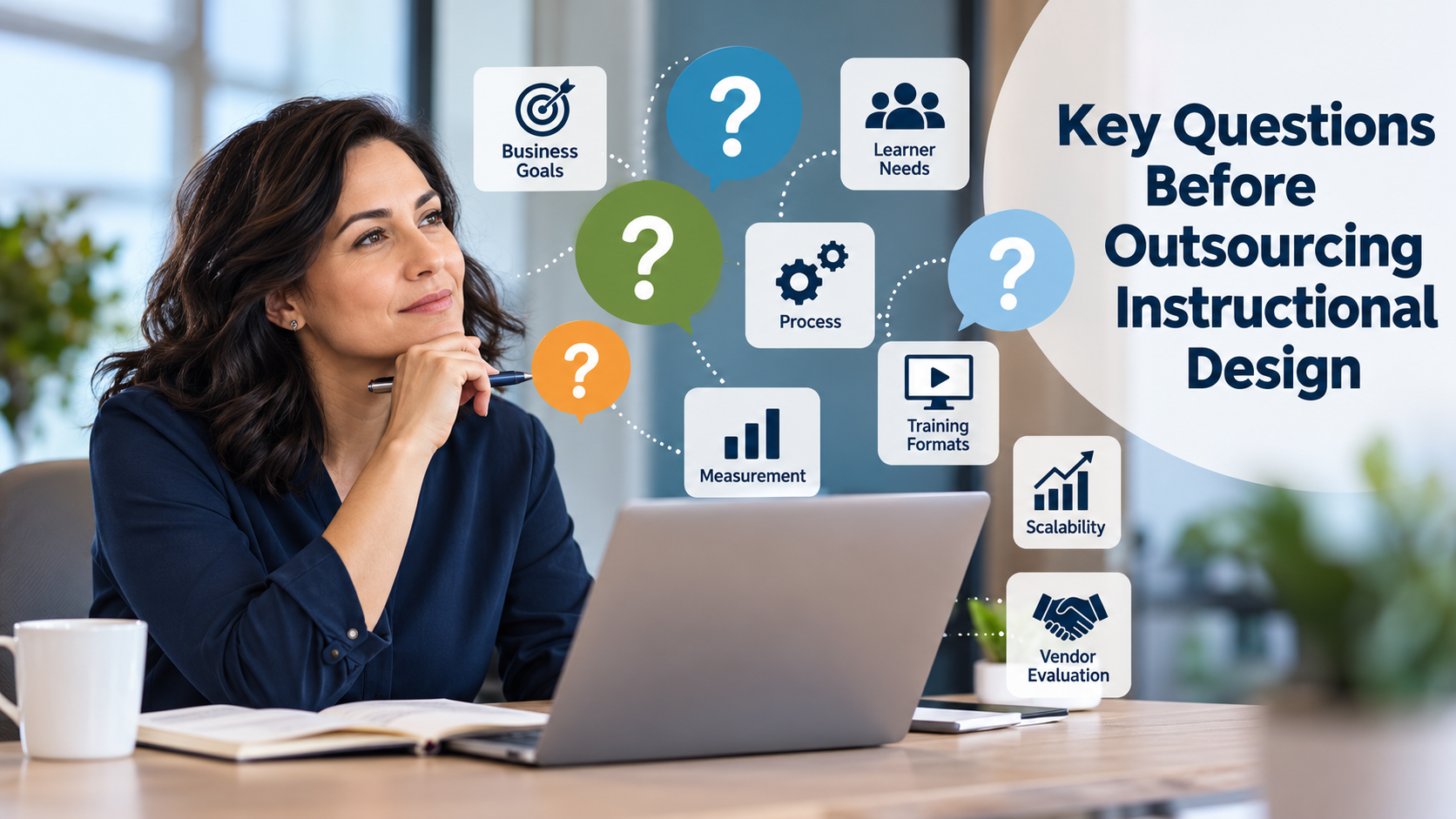
Key Questions Before Outsourcing Instructional Design
Key Questions Before Outsourcing Instructional Design Outsourcing instructional design can help organizations expand training capacity, improve course quality, and move important learning projects for…