Change Management Consultants
Need experienced change management consultants to help your employees navigate change, adopt new technology and embrace new ways of working?
TrainingFolks provides experienced change management consultants, contract change managers and organizational change management (OCM) specialists who integrate with your team to develop change strategies, engage stakeholders, manage resistance and drive employee adoption.
From ERP implementations and AI adoption to digital transformation and organizational restructuring, we provide the right change management talent to help your organization successfully implement and sustain change.
Change Manager Staffing & Consulting Services
Need experienced change management professionals to help employees adopt new systems, processes, or organizational changes?
TrainingFolks connects organizations with skilled business change managers and change management consultants who develop change strategies, engage stakeholders, manage resistance, and support employee adoption. Whether you're implementing new technology or managing a major business transformation, we provide the change management expertise your project needs.
Experienced Change Management Consultants to Drive Business Transformation
TrainingFolks provides experienced organizational change management (OCM) consultants and contract change managers to organizations across the United States and Canada. Our change management professionals support ERP implementations, digital transformation, AI adoption, organizational restructuring and other business change initiatives.
Introducing new technology or changing business processes requires more than a successful technical implementation. Employees need to understand why changes are happening, how their roles will be affected and what support is available to help them adapt.
Our change management consultants work alongside your internal teams, business leaders and project stakeholders to assess the impact of change, develop communication and engagement plans, manage resistance, address employee concerns and identify training needs.
What sets TrainingFolks apart is our combined expertise in organizational change management, corporate training and technology adoption. We understand the importance of connecting change management and employee training to help organizations achieve lasting adoption.
Every change initiative is different, and the expertise required can vary depending on the size, complexity and stage of the project. TrainingFolks provides experienced change management consultants who can supplement your existing team or lead change initiatives, with flexible contract engagements tailored to your project requirements, timelines and budget.
Change Management Experience Levels
TrainingFolks provides change management staffing support across different experience levels, from Change Agents who coordinate project communications and activities to experienced Change Managers who lead enterprise-wide change initiatives.
Understanding the responsibilities and capabilities of each role helps organizations identify the right change management professionals for their project requirements, organizational complexity, and business objectives.
Typically Up to 2 Years of Experience
Change Agent — Level I
Level I Change Agents provide foundational administrative and project support, helping change managers coordinate communications, documentation, and activities related to organizational change initiatives.
Key Responsibilities
- Coordinate documentation and information related to ongoing change initiatives and system implementations.
- Support the development and maintenance of change management plans and project deliverables.
- Assist with communication plans, sponsor roadmaps, coaching plans, and employee training plans.
- Monitor and report on organizational trends or events that may affect business operations.
- Help coordinate stakeholder communications, meetings, and project updates.
- Support project teams with document tracking, reporting, scheduling, and change management administration.
Typical Qualifications: Associate-level degree or equivalent certification, up to two years of relevant administrative or business experience, familiarity with change management principles and tools, and intermediate proficiency in Microsoft Office applications.
Typically 2–8 Years of Experience
Change Agent — Level II
Level II Change Agents take a more active role in planning and coordinating change management activities. They work with project teams, business stakeholders, and operational leaders to support communications, identify change risks, and monitor progress.
Key Responsibilities
- Serve as a key point of contact for change-related communications, project updates, and implementation schedules.
- Coordinate stakeholder communications to ensure employees understand upcoming changes and project expectations.
- Identify potential change risks, assess impacts, and support the development of mitigation strategies.
- Develop and maintain communication plans, sponsor roadmaps, coaching plans, training plans, and resistance management materials.
- Monitor change activities, employee feedback, and organizational trends that may affect business operations.
- Measure and report on change management progress, activities, and success metrics.
- Work with project teams and operational leaders to coordinate change management deliverables and employee readiness activities.
Typical Qualifications: Undergraduate degree or equivalent relevant experience, practical knowledge of organizational change management methodologies, experience supporting significant organizational change initiatives, and advanced proficiency with Microsoft Office and project communication tools.
Typically 8+ Years of Experience
Change Manager — Level III
Senior Change Managers lead organizational change initiatives, developing strategies that help employees, leadership teams, and business units successfully transition to new systems, processes, and ways of working.
They work closely with executive sponsors, project managers, and organizational leaders to improve change readiness, manage resistance, and support employee adoption across complex business initiatives.
Key Responsibilities
- Define and lead organizational change management strategies aligned with business objectives.
- Apply structured change management methodologies to support major transformation initiatives.
- Assess organizational readiness, identify change impacts, and develop risk mitigation strategies.
- Develop and oversee communication plans, sponsor roadmaps, coaching plans, training plans, and resistance management strategies.
- Engage and coach executive sponsors, senior leaders, and project teams throughout the change process.
- Support organizational design activities and the definition of new roles and responsibilities.
- Establish change management success metrics and monitor employee readiness, adoption, and progress.
- Lead change management resources and coordinate activities across departments and stakeholder groups.
- Manage change initiative budgets, resources, and project deliverables.
Typical Qualifications: Eight or more years of organizational change management experience, proven involvement in large-scale change initiatives, strong knowledge of change management frameworks and project management principles, and relevant industry expertise. Professional change management accreditation and graduate-level education may be required depending on the engagement.
Common Business Challenges Our Change Management Consultants Help Solve
Organizations face different challenges when introducing new technology, changing business processes or managing large-scale transformations. From employee resistance and limited internal resources to low technology adoption, these challenges can affect project timelines, budgets and business performance.
Our change management consultants work with your teams to address these challenges and help your organization achieve its business objectives.
Lack of a Clear Change Management Strategy
Organizations often begin transformation projects without a clear plan for managing the impact on employees. Our change management consultants help develop practical organizational change management (OCM) strategies that align with business objectives, project timelines and employee needs.
Employees Are Not Ready for Change
Employees may be uncertain about how new systems, processes or organizational changes will affect their roles. Our consultants conduct change readiness and impact assessments to identify affected employee groups, understand their concerns and determine what support is needed before and during implementation.
Ineffective Communication & Limited Stakeholder Engagement
When employees and stakeholders receive inconsistent or insufficient information, uncertainty and resistance can increase. Our change management consultants develop communication plans, stakeholder engagement strategies and employee awareness campaigns to keep people informed and involved throughout the project.
Challenges with AI Adoption in the Workplace
Introducing AI into the workplace can create uncertainty around job responsibilities, employee expectations and the responsible use of new technology. Our change management consultants help organizations communicate their AI strategy, prepare managers and employees, identify training needs and support the adoption of AI-enabled tools and processes.
Employee Resistance & Lack of Leadership Buy-In
Even well-planned business transformations can struggle when employees resist change or leaders are not actively supporting it. Our consultants work with executive sponsors, managers and business leaders to address resistance, strengthen leadership engagement and help managers guide their teams through change.
Low Adoption of New Systems & Technology
Implementing a new ERP, CRM or HCM system does not guarantee employees will use it effectively. Our change management consultants work alongside project and training teams to prepare employees for new systems, support go-live readiness and help organizations get more value from their technology investments.
Employee Training Is Not Aligned with Business Change
Training is sometimes developed too late or without a clear understanding of how employees' responsibilities are changing. Drawing on TrainingFolks' expertise in change management and corporate training, our consultants help identify learning needs and ensure employee training supports the broader change management strategy.
Difficulty Measuring & Sustaining Change
A successful go-live does not necessarily mean a change has been fully adopted. Our consultants help organizations establish meaningful success measures, monitor employee adoption, gather feedback and identify where additional communication, training or leadership support is needed.
Flexible Change Management Consultant Engagements
Not every organization has the internal resources or expertise to manage change effectively, particularly when multiple business transformation initiatives are underway. TrainingFolks provides flexible access to experienced change management consultants without the need to permanently expand your workforce.
We work with you to understand your business objectives, organizational culture, project scope, change management approach and existing team capabilities to identify consultants with the right experience for your organization.
Our contract engagements can accommodate short-term assignments, long-term projects and phased implementations. As business priorities change, we can help you scale your change management resources, address gaps in internal expertise and build organizational change capability.
Whether you are managing an ERP implementation, introducing AI into the workplace or undertaking a broader workforce transformation, TrainingFolks can provide individual consultants or teams of change management and training specialists across North America.
Why Choose TrainingFolks for Change Management Consultants?
The pace of organizational change is increasing. New technologies, artificial intelligence and evolving business models are changing how employees work and the skills they need. Organizations must manage these changes while maintaining productivity, employee engagement and business performance.
TrainingFolks brings together expertise in organizational change management, corporate training, learning and development, and technology adoption. We understand the challenges organizations face when managing multiple change initiatives, addressing change fatigue and preparing employees for the future of work.
We focus on identifying change management consultants with relevant industry experience, professional qualifications and a proven track record of supporting similar business transformations. Our consultants can work within your existing change management methodologies, organizational culture and project teams.
Our ability to provide both change management consultants and complementary training resources allows clients to work with one experienced partner to build internal change capabilities, improve employee readiness, support workforce transformation and realize the business benefits of change.
Need an Experienced Change Management Consultant for Your Next Project?
Whether you're implementing new technology, introducing AI into the workplace or managing a complex business transformation, TrainingFolks can provide experienced change management consultants with the right expertise to support your project.
Let's discuss your change management needs and find the right consultant for your organization.

Frequently Asked Questions
A change management consultant helps organizations manage the impact of business change on employees, leaders and day-to-day operations. Their primary responsibility is to prepare people for change, support the adoption of new ways of working and help the organization achieve the intended benefits of its investment.
Depending on the project, a change management consultant may be responsible for:
- Developing organizational change management (OCM) strategies.
- Conducting change readiness and impact assessments.
- Developing employee communication and stakeholder engagement plans.
- Coaching business leaders and executive sponsors.
- Identifying employee training and development requirements.
- Addressing employee resistance and change fatigue.
- Measuring employee adoption and business outcomes.
An experienced change management consultant works across business, technology, project management and training teams to ensure that organizational change is not only implemented but successfully adopted and sustained.
The best time to engage a change management consultant is during the early planning stages of a business transformation, ideally before decisions about implementation, employee communications and training have been finalized.
Early involvement gives the consultant an opportunity to understand the business objectives, assess organizational readiness, identify affected employee groups and develop a change management strategy alongside the overall project plan.
However, organizations can benefit from engaging a consultant at any stage, particularly when:
- Internal teams lack the capacity or experience to manage change.
- Multiple business transformation initiatives are underway.
- Employees are struggling to adopt new systems or processes.
- Project teams are encountering unexpected resistance.
- Leadership engagement or employee readiness is below expectations.
- A technology investment is not delivering its anticipated business benefits.
TrainingFolks provides contract change management consultants who can join an existing project team at any stage, from initial planning through implementation and post-go-live support.
A qualified change management consultant should combine practical business transformation experience with a strong understanding of organizational change management, stakeholder engagement, leadership development and employee adoption.
Organizations should look for experience that aligns with the nature of their change initiative, rather than relying solely on professional certifications or years of experience.
Important qualifications and capabilities include:
- Experience supporting similar organizational or technology transformations.
- Knowledge of established change management frameworks, such as Prosci ADKAR or Kotter's 8-Step Process.
- Relevant professional credentials, such as Prosci certification or the Certified Change Management Professional (CCMP) credential.
- Experience conducting organizational readiness and change impact assessments.
- Strong communication, facilitation and leadership coaching skills.
- An understanding of corporate training, adult learning and employee performance.
- The ability to measure adoption and connect change management activities to business outcomes.
The right consultant should also be able to adapt their approach to your organizational culture, existing change management methodology and business priorities.
Change management is critical to ERP implementations and digital transformation because the success of a new technology depends largely on how effectively employees adopt it and incorporate it into their daily work.
Implementing platforms such as SAP, Oracle, Workday, Microsoft Dynamics 365 or Salesforce often changes more than the software employees use. It can fundamentally change business processes, job responsibilities, reporting structures and how departments work together.
Organizational change management helps businesses prepare for these changes through stakeholder engagement, impact assessments, employee communications, leadership support, training and go-live readiness activities.
For example, an ERP implementation may introduce standardized business processes across multiple locations. Even when the system is technically ready, employees may struggle if they do not understand the new processes, their responsibilities or how to perform their jobs using the new system.
TrainingFolks brings together change management consultants, instructional designers, training developers and software trainers to help organizations connect their technology implementation with employee readiness, user adoption and long-term business performance.
Successful AI adoption requires organizations to address the people, processes, skills and cultural changes associated with introducing artificial intelligence into the workplace. Providing employees with access to AI tools is only one part of the transformation.
Organizations also need to consider how AI will affect job responsibilities, decision-making, productivity, existing business processes and employee expectations.
An effective AI change management strategy should include:
- Assessing organizational readiness for AI adoption.
- Communicating why AI is being introduced and how employees will be affected.
- Preparing leaders and managers to support AI-driven workforce transformation.
- Addressing employee concerns about job security and changing responsibilities.
- Identifying AI literacy, skills development and training requirements.
- Reinforcing organizational policies for responsible and ethical AI use.
- Measuring employee adoption, proficiency and business impact.
Change management consultants can help organizations develop a structured approach to AI adoption that balances business objectives with the needs and concerns of employees.
By connecting organizational change management with corporate AI training and workforce development, businesses can better prepare their employees to work confidently and effectively alongside emerging technologies.
Organizations can reduce employee resistance and change fatigue by understanding the reasons behind employee concerns, improving communication, involving employees in the change process and managing the number of competing change initiatives.
Employee resistance does not always mean employees are unwilling to change. It may reflect uncertainty, previous negative experiences, insufficient training, competing workloads or a lack of confidence in the proposed changes.
Change fatigue can become particularly challenging when organizations introduce multiple new systems, business processes or organizational changes within a short period.
Practical ways to address employee resistance and change fatigue include:
- Listening to employees and identifying the underlying causes of resistance.
- Assessing the organization's capacity for additional change.
- Coordinating competing transformation initiatives and their impact on employees.
- Providing managers with the tools and information to support their teams.
- Communicating the reasons for change and its expected benefits.
- Providing relevant training, coaching and ongoing performance support.
- Gathering employee feedback and adjusting change activities where needed.
Experienced change management consultants help organizations address these challenges while building internal change capabilities and organizational resilience, particularly during periods of continuous business transformation.
The success of organizational change should be measured by employee adoption, sustained changes in behavior and the achievement of intended business outcomes. Completing a project on time or launching a new system does not necessarily mean the change has been successful.
Organizations should establish measurable success criteria before implementation and continue monitoring progress during and after the transition.
Common organizational change management metrics include:
- Change readiness: How prepared employees and business leaders are for the upcoming change.
- Stakeholder engagement: The level of participation and support from employees, managers and executive sponsors.
- Employee proficiency: How effectively employees perform their responsibilities following training.
- Technology adoption: How consistently employees use new systems and tools as intended.
- Behavioral change: Whether employees have adopted new processes and ways of working.
- Employee feedback: Employee confidence, sentiment and concerns throughout the transition.
- Business performance: Improvements in productivity, operational efficiency, service quality or other relevant business measures.
- Benefits realization: Whether the organization is achieving the expected value of its business transformation.
Change management consultants help organizations define appropriate measures, establish baselines, monitor progress and identify where additional communication, training or leadership support may be required.
The ultimate goal is not simply to implement change, but to ensure that it is adopted, sustained and delivers measurable value to the organization.
Our Recent Blog Posts

When to Engage an Instructional Designer for Custom Training Solutions
When to Engage an Instructional Designer for Custom Training Solutions Organizations often rely on training to support performance, system adoption, and employee development. However, not all training…

Reducing User Resistance Through Structured Technology Adoption Training
Reducing User Resistance Through Structured Technology Adoption Training User resistance is one of the most common challenges organizations face when introducing new technology. Even when systems are …
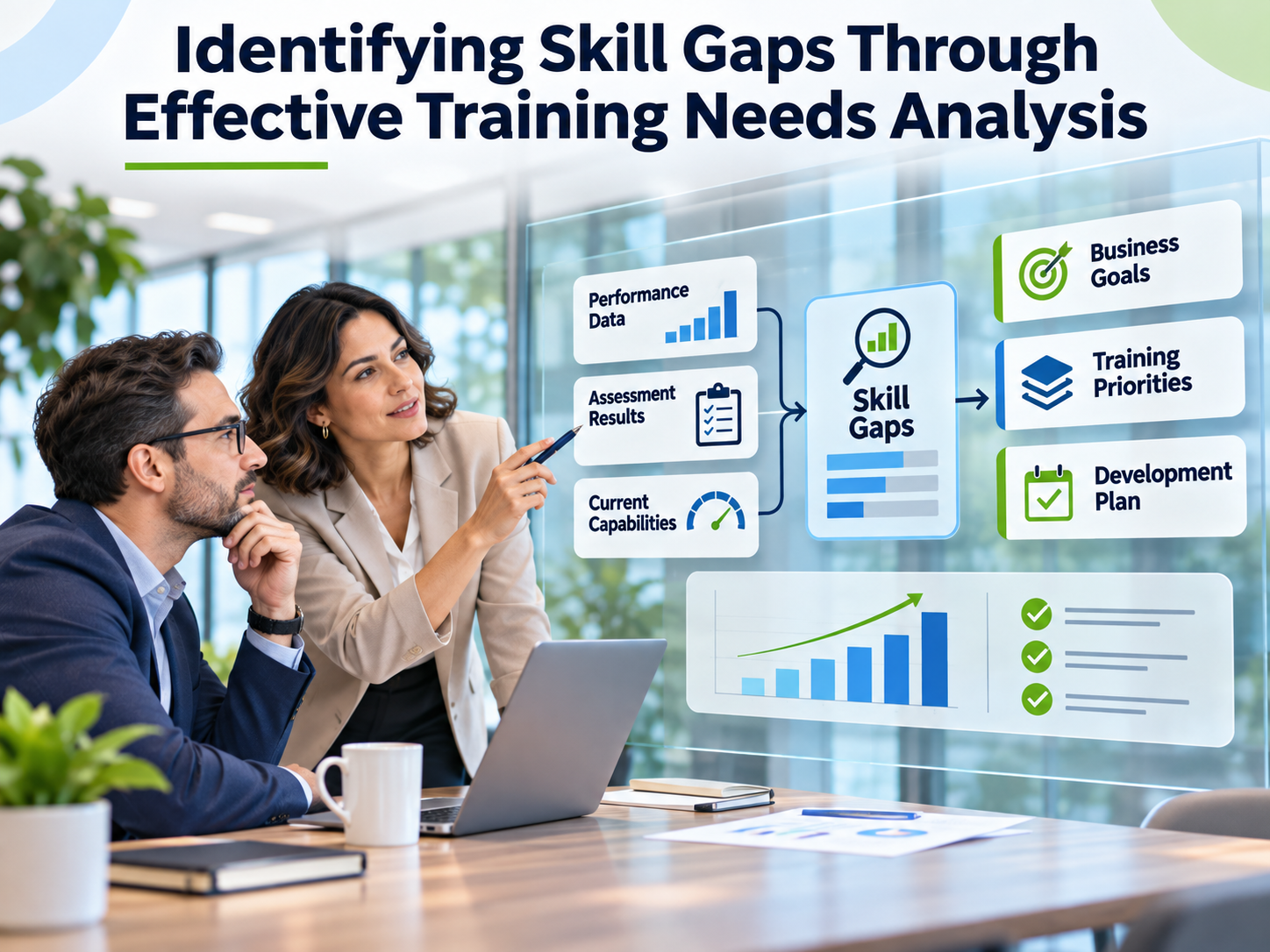
Identifying Skill Gaps Through Effective Training Needs Analysis
Identifying Skill Gaps Through Effective Training Needs Analysis Organizations rely on employee skills to meet performance goals and support business growth. When skill gaps exist, productivity can de…