
Identifying Skill Gaps Through Effective Training Needs Analysis
Organizations rely on employee skills to meet performance goals and support business growth. When skill gaps exist, productivity can decline, errors may increase, and teams may struggle to meet expectations.
A structured training needs analysis helps organizations identify these gaps and take action. By understanding where employees need support, organizations can design targeted training programs that improve performance and deliver measurable results.
What Is Training Needs Analysis
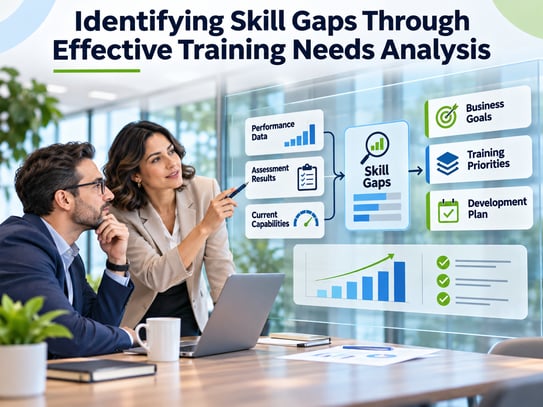
Training needs analysis is the process of evaluating current skills and comparing them to the skills required to perform effectively. This process helps organizations identify gaps that impact performance.
It involves collecting data, reviewing job requirements, and understanding business objectives. The goal is to ensure that training efforts are focused on areas that will have the greatest impact.
Connecting Skill Gaps to Business Performance
Skill gaps often affect key business outcomes such as efficiency, quality, and customer satisfaction. Identifying these gaps allows organizations to address issues before they grow.
When training is aligned with business needs, it becomes easier to measure success. Improvements in performance can be directly linked to targeted training efforts.
Methods for Identifying Skill Gaps
There are several methods organizations can use to identify skill gaps. Each approach provides different insights and helps build a complete picture of training needs.
Combining multiple methods ensures that the analysis is accurate and reflects real challenges faced by employees.
Key Methods Used in Training Needs Analysis
A structured analysis typically includes the following methods:
- Employee surveys to gather feedback on skill confidence
- Manager interviews to identify performance challenges
- Review of performance data and metrics
- Observation of employees performing job tasks
- Assessment tests to measure knowledge and skills
- Analysis of business goals and required competencies
Analyzing Results and Prioritizing Needs
Once data is collected, organizations must analyze the results to identify priority areas. Not all skill gaps require immediate action.
Prioritization should be based on factors such as business impact, urgency, and available resources. Focusing on high impact areas ensures that training delivers meaningful results.
Designing Targeted Training Solutions
After identifying and prioritizing skill gaps, organizations can design training programs that address specific needs. This includes selecting appropriate delivery methods and creating relevant content.
Targeted training improves engagement and helps employees apply new skills in their daily work.
Supporting Continuous Improvement
Training needs analysis should not be a one time activity. Business needs and employee skills continue to evolve.
Regular analysis helps organizations stay aligned with changing requirements and ensures that training remains relevant.
Measuring Impact
Organizations should measure the impact of training programs developed from needs analysis. Metrics such as performance improvement, employee feedback, and business outcomes provide valuable insights.
This data helps refine future training initiatives and supports ongoing improvement.
Conclusion
Identifying skill gaps through effective training needs analysis is essential for building strong and capable teams. By using structured methods and focusing on business impact, organizations can create training programs that deliver measurable results.
A consistent approach to analysis ensures that training investments are targeted, effective, and aligned with organizational goals.