
When Contract Trainers Are the Right Fit for Corporate Training Programs

Corporate Training Programs are essential for building workforce capability, supporting growth initiatives, and ensuring employees can perform effectively as organizational needs change. While many organizations maintain internal learning and development teams, there are times when internal resources alone are not enough. In these situations, contract trainers can play a valuable role.
Knowing when and how to use contract trainers helps organizations keep training quality high. It also allows them to stay flexible and mindful of costs.
This article looks at when contract trainers are a good choice for Corporate Training Programs. It discusses the value they add and how organizations can use them effectively in their overall learning strategy.
Get Your Free Contract Training Engagement Infographic
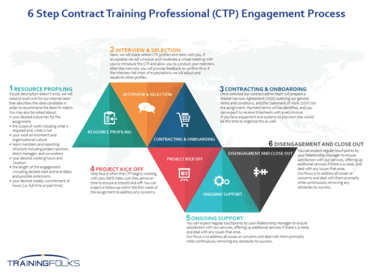

Understanding the Role of Contract Trainers
Contract trainers are learning professionals engaged for a defined period or project. Typically, organizations bring them in to design, deliver, or support training initiatives that require specific expertise, additional capacity, or rapid execution. Unlike permanent staff, contract trainers focus on clearly scoped objectives and deliver results efficiently.
For Corporate Training Programs, contract trainers often serve as an extension of the internal learning team. They work within existing frameworks, align with organizational goals, and deliver training that supports business outcomes. When selected carefully and supported properly, they can seamlessly integrate into an organization’s learning ecosystem.
When Specialized Expertise Is Required
One of the most common reasons organizations turn to contract trainers is the need for specialized knowledge. Corporate Training Programs frequently support initiatives such as system implementations, product launches, regulatory changes, or leadership development efforts. Internal teams might lack deep expertise in every subject area, especially when new technologies or methodologies emerge.
Trainers who focus on specific tools, industries, or skills add credibility and confidence to the learning experience. Their experience allows them to anticipate learner questions, provide relevant examples, and address challenges that arise during training. This level of expertise helps learners gain practical skills more quickly and reduces the risk of knowledge gaps.
Managing Scale and Capacity Challenges
Training demand is rarely steady. Corporate Training Programs often experience periods of intense activity followed by quieter phases. Large onboarding classes, enterprise-wide system rollouts, or compliance deadlines can quickly overwhelm internal teams.
Engaging contract trainers provides a practical way to manage these fluctuations. Organizations can scale delivery without long-term staffing commitments, ensuring learners receive timely training without sacrificing quality. After the peak period ends, contract trainers can leave. This allows internal teams to focus on ongoing learning needs and improving programs.
Supporting Speed and Timelines
Certain training initiatives require rapid deployment. Mergers, acquisitions, technology upgrades, and organizational changes often come with strict timelines. Corporate Training Programs must respond quickly to minimize disruption and support employee performance.
Experienced contract trainers are accustomed to working within compressed schedules. They can step into defined roles, follow established curricula, and begin delivery with minimal preparation time. This ability to move quickly helps organizations meet deadlines while maintaining a structured and professional learning experience.
Ensuring Consistency Across the Organization
Consistency is very important for many Corporate Training Programs. This is especially true for programs related to compliance, safety, customer experience, or brand standards. When trainers deliver training across multiple locations or teams, they can find it difficult to maintain a consistent message.
Contract trainers who align with standardized content and delivery guidelines can help ensure uniform learning outcomes. With proper onboarding and clear expectations, they can deliver training that reflects organizational priorities and reinforces consistent practices across the workforce.
Situations Where Contract Trainers Provide the Most Value
Contract trainers are most effective when engaged strategically rather than reactively. Organizations should consider them in situations such as:
- Training initiatives that require subject matter expertise not available internally
- Large-scale rollouts that exceed internal delivery capacity
- Short-term projects with defined start and end dates
- Programs requiring consistent delivery across multiple locations
- Time-sensitive initiatives with limited preparation windows
Using contract trainers in these situations helps Corporate Training Programs stay flexible. This way, they can still provide high-quality learning experiences.
Integrating Contract Trainers Into Corporate Training Programs
Successful engagement goes beyond selecting skilled trainers. Organizations must provide the structure and support needed for success. Clear learning objectives, facilitator guides, and defined delivery standards are essential. Contract trainers should understand not only what to teach, but why the training matters to the organization.
Communication is also critical. Internal stakeholders should establish clear points of contact, feedback processes, and expectations for reporting and evaluation. When organizations see contract trainers as trusted partners, those trainers can achieve better results.
Balancing Internal Teams and External Support
Contract trainers are not a replacement for internal learning teams. Instead, they complement internal capabilities. Corporate training programs work best when internal teams focus on strategy, program design, and long-term growth. Contract trainers can help with delivery and specific needs.
This balanced approach allows organizations to remain flexible without losing institutional knowledge or control over learning strategy. It also ensures that training efforts remain aligned with business goals and organizational culture.