
Leadership Development Strategies That Drive Organizational Success

Strong leadership is essential for every successful organization. Companies that invest in leadership development create capable leaders at all levels, build resilience, and ensure long-term success. Leadership development is not just about teaching people to manage teams or projects. It’s about shaping the skills, mindset, and behaviors that align with the organization’s culture and goals.
When done well, leadership development can transform an organization. It helps leaders inspire others, drive performance, and guide their teams through change and growth.
This article outlines key leadership development strategies that help build a strong leadership pipeline, foster innovation, and support continuous improvement across the organization.
Get our FREE DOWNLOAD: Leadership Development for Business Success
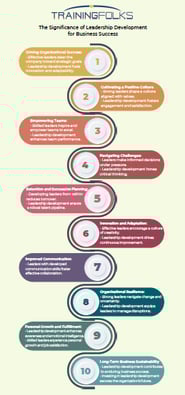

Align Leadership Development with Organizational Goals
Effective leadership development begins with alignment. The program should reflect the organization’s goals, priorities, and strategic direction.
Start by identifying the leadership skills and competencies your company needs most. Consider the long-term vision, market challenges, and future opportunities. For example, if innovation is a core focus, your leadership development should strengthen creativity, strategic thinking, and change management skills.
When leadership development aligns with business goals, leaders gain the tools they need to drive those goals forward. It also ensures that everyone shares the same vision, which is essential for collective success.
Create a Leadership Competency Model
A leadership competency model provides structure and clarity. It outlines the skills, behaviors, and traits leaders need to succeed in your organization.
To build a strong competency model, follow these steps:
-
Identify core competencies: Define the key skills that reflect your company’s goals and values. Examples include communication, problem-solving, decision-making, and emotional intelligence.
-
Differentiate by level: The competencies required for team leaders differ from those for executives. Tailor expectations for each leadership tier.
-
Gather feedback: Consult with current leaders and employees to ensure the model reflects real workplace needs and challenges.
Once in place, this model guides training design, performance reviews, and succession planning. It gives every leader a clear roadmap for growth.
Implement Mentorship and Coaching Programs
Mentorship and coaching are two of the most effective leadership development tools. Both provide leaders with direct guidance, feedback, and opportunities for reflection.
Mentorship connects emerging leaders with experienced professionals who share practical insights, lessons learned, and career advice. It encourages knowledge transfer and builds a culture of learning.
Coaching offers a more structured approach. Professional coaches work with leaders to set goals, improve specific skills, and overcome performance challenges. Coaching is particularly useful for developing communication, conflict resolution, and strategic planning skills.
By combining mentorship and coaching, organizations give leaders the support they need to grow with confidence and purpose.
Promote Continuous Learning and Development
Leadership development should be a continuous process, not a single event. Encourage leaders to pursue ongoing learning through workshops, online courses, and certifications. This keeps their skills current and their motivation high.
Beyond formal learning, promote experiential learning. Encourage leaders to reflect on their successes and challenges, seek peer feedback, and apply lessons in real situations. Provide access to articles, books, and webinars that inspire fresh thinking.
A culture of continuous learning ensures that leadership capabilities evolve in tandem with business needs and industry trends.
Encourage Cross-Functional Collaboration
Leaders are most effective when they understand how different parts of the organization work together. Encourage leaders to participate in cross-functional projects to broaden their perspective and strengthen collaboration.
Rotating leaders through different roles or departments can also be valuable. This exposure helps them see how their decisions affect the larger organization and develop stronger problem-solving and relationship-building skills.
Cross-functional collaboration improves teamwork and unity, both of which are essential for achieving long-term organizational success.
Develop a Strong Succession Planning Strategy
Succession planning ensures continuity and prepares the next generation of leaders. Identify potential successors for key positions and assess their readiness. Then, create individual development plans to help them build the necessary skills.
Give emerging leaders opportunities to lead projects, make decisions, and take on new responsibilities. This hands-on experience prepares them for future roles while building confidence and competence.
Regularly review and update succession plans to reflect changing business needs and talent priorities. A strong succession plan safeguards the organization’s stability and supports future growth.
Measure and Evaluate Leadership Development Efforts
To ensure leadership development programs are effective, track their impact using clear metrics.
Useful performance indicators include:
-
Competency assessments: Measure progress against your leadership competency model.
-
Employee engagement scores: Monitor how leadership improvements influence engagement and retention.
-
Business outcomes: Track productivity, innovation, and profitability metrics linked to leadership development.
-
Feedback: Gather insights from employees who work with or report to leaders.
Ongoing evaluation ensures programs stay relevant and effective. It also provides valuable data for refining future initiatives.
Building Leaders Who Build Success
Leadership development is an investment in the future of your organization. By aligning programs with business goals, creating a competency framework, offering mentorship and coaching, and promoting continuous learning, companies can build strong and capable leaders.
Encouraging collaboration, developing a succession plan, and measuring progress ensure leadership efforts deliver lasting value.
When organizations invest in leadership development, they build a culture of growth, innovation, and accountability that drives success at every level.