
How Effective Technology Adoption Programs Drive ROI on New Systems

Organizations invest heavily in new systems with the expectation of improved efficiency, stronger reporting, and better decision making. However, the true return on investment does not come from the technology itself. It comes from how effectively employees adopt and use it. Without structured Technology Adoption programs, even well designed systems can fail to deliver expected results.
Technology Adoption is not a single training session delivered at go live. It is a structured process that aligns communication, training, leadership support, and performance measurement. When executed correctly, it accelerates user confidence, reduces errors, and strengthens overall return on investment.
Get our FREE Download:
Embracing Technology in Learning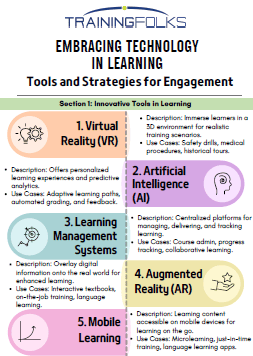

The Gap Between Implementation and Adoption
System implementation focuses on configuration, testing, and deployment. Technology Adoption focuses on people. This distinction is critical. A system can be technically sound while still experiencing low usage, inconsistent data entry, or high support ticket volumes.
Common adoption challenges include:
-
Resistance to change
-
Lack of role specific training
-
Unclear communication about benefits
-
Limited leadership reinforcement
-
Insufficient post launch support
Without addressing these human factors, ROI remains limited. Employees may revert to old processes or underutilize key features.
Align Adoption Strategy with Business Objectives
Effective Technology Adoption begins with clarity about desired outcomes. What business improvements is the system intended to produce? Faster reporting cycles? Improved compliance tracking? Higher sales productivity?
Defining these outcomes early allows organizations to design training and communication strategies that reinforce specific behaviors. Adoption efforts should emphasize how the system supports daily tasks and broader business goals.
When employees understand the purpose behind the change, engagement increases.
Design Role Based Training
One of the most effective drivers of Technology Adoption is role specific instruction. Generic system overviews overwhelm users and reduce retention. Instead, training should focus on the workflows each role performs.
For example, managers may need guidance on dashboards and approvals. Front line employees may need step by step instruction on transaction entry. Executives may require training on analytics interpretation.
Role based training improves clarity and shortens time to proficiency. It also reduces confusion at go live.
Integrate Communication and Leadership Support
Technology Adoption programs must include strong communication from leadership. Employees need consistent messaging about why the system is being introduced and what success looks like.
Leaders should reinforce expectations during team meetings and performance discussions. When managers demonstrate commitment to the new system, employees follow their example.
Transparent communication also provides space to address concerns and clarify misunderstandings early.
Provide Reinforcement Beyond Go Live
Adoption does not end at launch. Post implementation reinforcement is critical for sustaining behavior change. Short refresher sessions, job aids, and quick reference guides help employees apply knowledge consistently.
Support channels should remain accessible. Monitoring frequently asked questions or recurring errors allows organizations to deliver targeted reinforcement where needed.
Ongoing measurement of usage metrics such as login frequency, transaction accuracy, and reporting utilization provides insight into adoption health.
Measure Adoption to Demonstrate ROI
To connect Technology Adoption efforts with return on investment, organizations must track relevant metrics. These may include:
-
Reduction in manual processes
-
Decrease in support tickets over time
-
Improved data accuracy
-
Faster reporting cycles
-
Increased productivity within key departments
By comparing performance indicators before and after implementation, leadership gains visibility into system impact.
Training participation and assessment data should also be reviewed alongside operational metrics. This integrated analysis demonstrates how structured adoption programs contribute to ROI.
Engage Expertise to Strengthen Adoption
Large scale system rollouts often require structured change management and instructional design expertise. Internal teams may possess system knowledge but lack the time or experience to design comprehensive adoption programs.
Engaging experienced learning and development professionals can support role mapping, training design, facilitation, and measurement strategy. External expertise brings objective perspective and proven frameworks.
When Technology Adoption is treated as a strategic initiative rather than a technical afterthought, outcomes improve significantly.
Key Components of an Effective Technology Adoption Program
Strong Technology Adoption programs typically include:
-
Clear definition of desired business outcomes
-
Role based training aligned with real workflows
-
Leadership communication and visible sponsorship
-
Reinforcement tools such as job aids and refresher modules
-
Ongoing measurement of usage and performance metrics
These components work together to strengthen adoption and protect investment.
New systems promise improved efficiency and better performance. However, return on investment depends on how effectively employees adopt and use the technology. Technology Adoption programs bridge the gap between implementation and measurable impact.
By aligning training with business goals, supporting leaders in reinforcing expectations, and measuring adoption metrics consistently, organizations can ensure their technology investments deliver tangible value. When supported by structured learning strategy and experienced facilitation, Technology Adoption becomes a driver of sustained performance rather than a one time event.